
Mike Pailliotet
Administrator
- Joined
- Oct 6, 2006
- Messages
- 117,266
Got a call today from a cleaner who just bought one of my multi-surface wands..
He cleaned a wood floor…
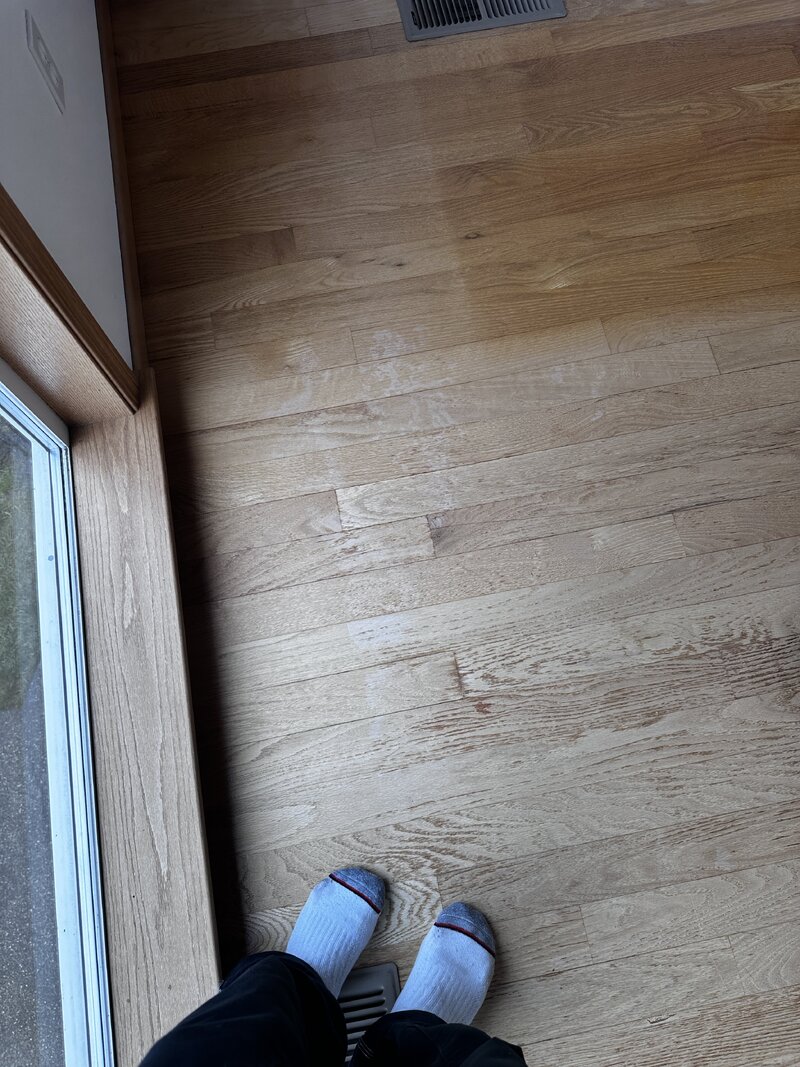
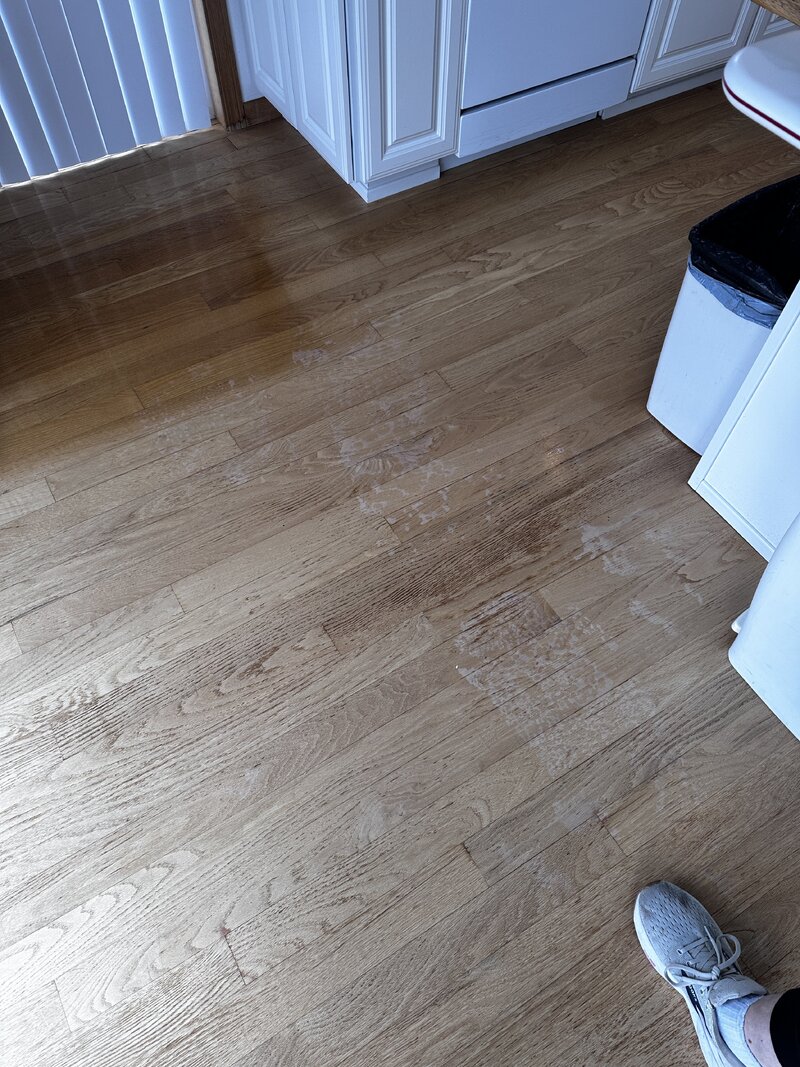
and ended up with white blotchy spots all over it.
After a few questions, here’s what we had:
No prespray
No agitation
Straight wanding with high heat (Everest 870)
Hooked to customer’s hard water
No softener
No idea what had been used on the floor before
And the key detail…
The spots felt sticky as they dried.
What Happened
This floor had a topical coating buildup (Mop & Glo, Rejuvenate, etc.).
He hit it with:
high heat
plain water
no chemistry
no agitation
So instead of cleaning it…
He partially melted and redistributed the coating,
and it dried back as white haze and blotching.
But Here’s the Bigger Issue
This isn’t just a “technical mistake.”
This is what happens when we:
Take work we’re not trained for
Use tools we don’t understand
Skip the inspection phase entirely
And if we’re being honest…
Winter slowdowns push some guys into doing things they shouldn’t be doing.
We’ve all felt that pressure.
But this is exactly where professionalism shows up.
The Standard We Have to Hold
Before touching any hard surface floor,
you should have:
1. Education
Can you identify the material?
Can you recognize coatings vs factory finish?
2. Process knowledge
Do you know when to clean vs strip?
Do you understand pH, dwell time, and agitation?
3. Proper equipment
Not just a wand
But the ability to scrub, control moisture, and recover safely
Because Here’s the Truth
A tool doesn’t qualify you.
A purchase doesn’t prepare you.
Just because you can hook up a wand…
doesn’t mean you should be cleaning that surface.
What This Job Became
What should have been a simple maintenance clean is now:
A strip job
A residue removal process
Possibly a recoat situation
In other words… a correction job for someone who knows what they’re doing.
Final Thought
This isn’t about beating anyone up.
It’s about protecting:
the customer
the cleaner
and the reputation of our industry
Ifyou don’t know what you’re looking at…
Slow down. Learn. Test. Or pass.
Because guessing on hard surfaces—especially wood—gets expensive fast.
He cleaned a wood floor…
and ended up with white blotchy spots all over it.
After a few questions, here’s what we had:
No prespray
No agitation
Straight wanding with high heat (Everest 870)
Hooked to customer’s hard water
No softener
No idea what had been used on the floor before
And the key detail…
The spots felt sticky as they dried.
What Happened
This floor had a topical coating buildup (Mop & Glo, Rejuvenate, etc.).
He hit it with:
high heat
plain water
no chemistry
no agitation
So instead of cleaning it…
He partially melted and redistributed the coating,
and it dried back as white haze and blotching.
But Here’s the Bigger Issue
This isn’t just a “technical mistake.”
This is what happens when we:
Take work we’re not trained for
Use tools we don’t understand
Skip the inspection phase entirely
And if we’re being honest…
Winter slowdowns push some guys into doing things they shouldn’t be doing.
We’ve all felt that pressure.
But this is exactly where professionalism shows up.
The Standard We Have to Hold
Before touching any hard surface floor,
you should have:
1. Education
Can you identify the material?
Can you recognize coatings vs factory finish?
2. Process knowledge
Do you know when to clean vs strip?
Do you understand pH, dwell time, and agitation?
3. Proper equipment
Not just a wand
But the ability to scrub, control moisture, and recover safely
Because Here’s the Truth
A tool doesn’t qualify you.
A purchase doesn’t prepare you.
Just because you can hook up a wand…
doesn’t mean you should be cleaning that surface.
What This Job Became
What should have been a simple maintenance clean is now:
A strip job
A residue removal process
Possibly a recoat situation
In other words… a correction job for someone who knows what they’re doing.
Final Thought
This isn’t about beating anyone up.
It’s about protecting:
the customer
the cleaner
and the reputation of our industry
Ifyou don’t know what you’re looking at…
Slow down. Learn. Test. Or pass.
Because guessing on hard surfaces—especially wood—gets expensive fast.